
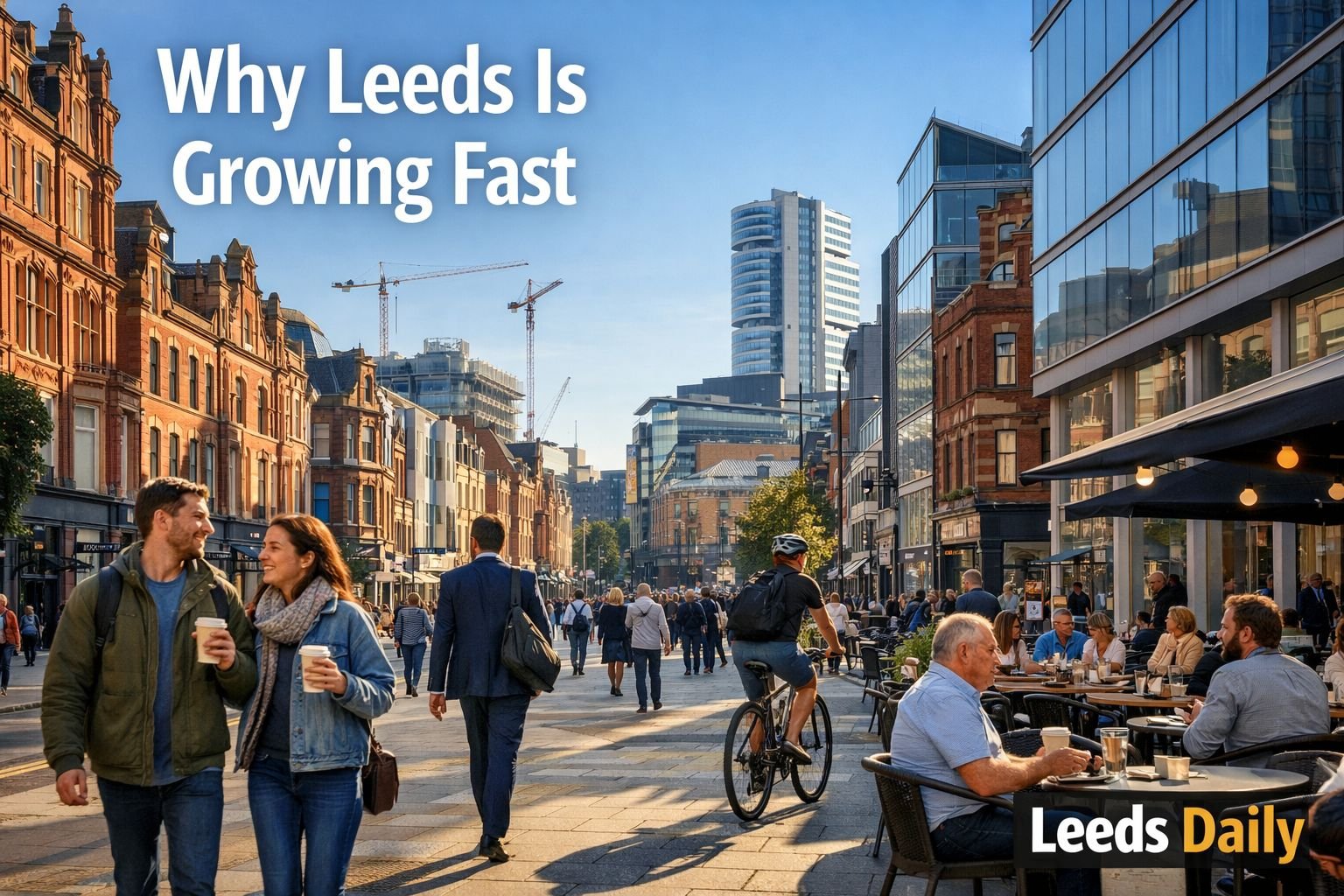
Walk through Leeds city centre on any weekday morning and the momentum is impossible to miss. Cranes punctuate the skyline. New apartment blocks rise beside long established streets. Coffee shops are full before nine, with professionals, students, freelancers and founders all moving at pace. This is a city in transformation, and for those who know Leeds well, the growth feels earned rather than forced.
Leeds has become one of the fastest growing major cities in the UK because it offers something many places struggle to balance: opportunity without unaffordability, ambition without exhaustion, and a quality of life that still feels grounded. For people considering relocation, living in leeds is no longer a compromise. It is a deliberate choice.
A population growing for the right reasons
Leeds has been expanding steadily for more than a decade, outpacing much of the wider region. The key difference is not just how many people are moving here, but who they are. Growth is being driven by professionals relocating for work, graduates staying after university, and families choosing to put down long term roots.
This is not a short term influx. People who choose living in leeds tend to stay. They find work, build careers, buy homes, and integrate into neighbourhoods that still feel local despite the city’s scale. That stability is one of the strongest indicators that Leeds’ growth is sustainable.
Jobs growth that supports real careers
Leeds’ economy is one of the most diverse outside London. Financial services, legal, healthcare, digital and tech, manufacturing, education and the public sector all play significant roles. That diversity matters. It gives residents flexibility and resilience when industries shift.
Over recent years, Leeds has consistently performed strongly within West Yorkshire, with economic output growing faster than surrounding areas. Long term plans focus on creating high value roles rather than simply increasing headcount. For many people, living in leeds means they can progress professionally without needing to relocate every few years.
Financial and professional services at national scale
Leeds is widely recognised as the largest financial and professional services centre outside London. Banks, accountancy firms, legal practices and regulatory bodies all maintain major operations here, forming what is often referred to locally as the Northern Square Mile.
This concentration of expertise brings stable, well paid jobs and long term investment. It also attracts talent from across the UK who want serious careers without the cost of the capital. For those working in finance or professional services, living in leeds offers national level opportunity with regional affordability.
A tech and digital sector growing faster than average
Leeds has quietly built one of the strongest tech and digital ecosystems in the North. Thousands of companies operate across software, data, cybersecurity, health tech and digital services. Employment growth in these sectors has consistently outperformed national averages.
Senior tech salaries in Leeds increasingly match those offered in London, but housing and living costs remain far lower. That gap is a major reason why living in leeds appeals to developers, analysts and digital leaders who want balance rather than burnout.
Creative industries gaining real momentum
The decision by Channel 4 to base its national headquarters in Leeds marked a turning point for the city’s creative economy. Beyond the direct jobs created, the move encouraged independent production companies, freelancers and creative agencies to set up locally.
Leeds now acts as a northern collaboration hub, connecting talent across Yorkshire and the North West. For people working in media and creative industries, living in leeds combines opportunity with a cost of living that allows creative careers to be viable long term.
Housing affordability that still makes sense
Housing is one of the strongest reasons people choose living in leeds. While prices have risen, average values remain below the UK average and noticeably lower than comparable cities such as Manchester.
First time buyers still find realistic options close to the city centre, while families can access larger homes in suburban areas without stretching finances beyond reason. The difference is not marginal. It changes what people can afford and how long they can stay.
A rental market under pressure but still workable
Demand in the Leeds rental market is strong, driven by population growth and job creation. Rents have increased, but tenants in Leeds typically spend a lower proportion of income on housing than those in other fast growing cities.
That balance matters. Living in leeds still allows room for saving, social life and long term planning rather than constant financial stress.
Universities that feed the city, not drain it
Leeds has one of the largest student populations in the UK, supported by highly regarded universities. What sets the city apart is graduate retention. A significant proportion of students stay after finishing their degrees, while many others move to Leeds after studying elsewhere.
This steady inflow of skilled young workers strengthens local businesses and keeps the city dynamic. For graduates, living in leeds offers continuity and career development rather than the need to restart in a new city.
Transport and connectivity without daily chaos
Leeds benefits from strong national rail connections and sits at the heart of the motorway network. Planned improvements to regional rail and mass transit aim to make moving around the city easier and more sustainable over time.
Within Leeds itself, many people walk or cycle to work, especially in central neighbourhoods. Shorter commutes are a genuine quality of life advantage and a big reason why living in leeds feels manageable compared with larger metropolitan areas.
Regeneration reshaping the city centre
Leeds is undergoing one of the largest regeneration programmes in the UK. The South Bank development alone will significantly expand the city centre, delivering thousands of new homes, workplaces and public spaces.
This is not speculative growth. Development is responding to real demand from residents and employers. For people choosing living in leeds, regeneration means more housing choice and improved amenities rather than displacement.
Quality of life beyond economics
Growth alone does not explain Leeds’ appeal. The city consistently performs well on measures of wellbeing, supported by extensive green space, strong healthcare provision and an active cultural scene.
From Roundhay Park and Temple Newsam to smaller neighbourhood parks, access to green space is part of everyday life. Food, music and nightlife feel authentic rather than manufactured. That sense of place is one of the reasons living in leeds resonates so strongly with newcomers.
Choosing where to live in Leeds
Neighbourhood choice shapes the experience of living in leeds. Headingley and Hyde Park remain popular with students and young professionals. Chapel Allerton and Meanwood attract families and established professionals. Roundhay and Alwoodley are among the most sought after family areas, while the city centre and Holbeck reflect the pace of regeneration.
Each area offers a different version of Leeds life, but all benefit from proximity to jobs, culture and green space.
Leeds compared with other major UK cities
Leeds is often compared with Manchester and Birmingham. Manchester offers scale and global visibility. Birmingham benefits from major transport investment. Leeds’ strength lies in balance. Strong job growth, lower housing costs, respected universities and genuine liveability all exist together.
That balance is why living in leeds increasingly feels sustainable rather than transitional.
The challenges that remain
Leeds is not perfect. Traffic congestion remains an issue in parts of the city. Housing supply has struggled to keep pace with demand. Inequality between neighbourhoods persists, and the weather can be unforgiving.
What matters is direction. Investment strategies and regeneration programmes are actively addressing these challenges rather than ignoring them.
The future of Leeds
Looking ahead, Leeds aims to grow in a way that prioritises walkable neighbourhoods, green infrastructure and high value employment. Thousands of new homes are planned, alongside continued expansion in finance, tech, healthcare and creative industries.
For those considering relocation, living in leeds offers something increasingly rare in the UK. It provides opportunity without overwhelming cost, ambition without constant pressure, and growth that feels shared rather than extractive.
Final verdict
Leeds is growing because people want to be here. Graduates stay. Professionals build careers. Families put down roots. Communities expand alongside investment rather than being pushed aside.
In a national landscape where many cities struggle to balance growth and liveability, living in leeds continues to work. That is why Leeds is not just growing quickly, but growing well.
Read More: Leeds Council News: The Decisions Raising Bills, Upgrading Homes and Changing Daily Life