
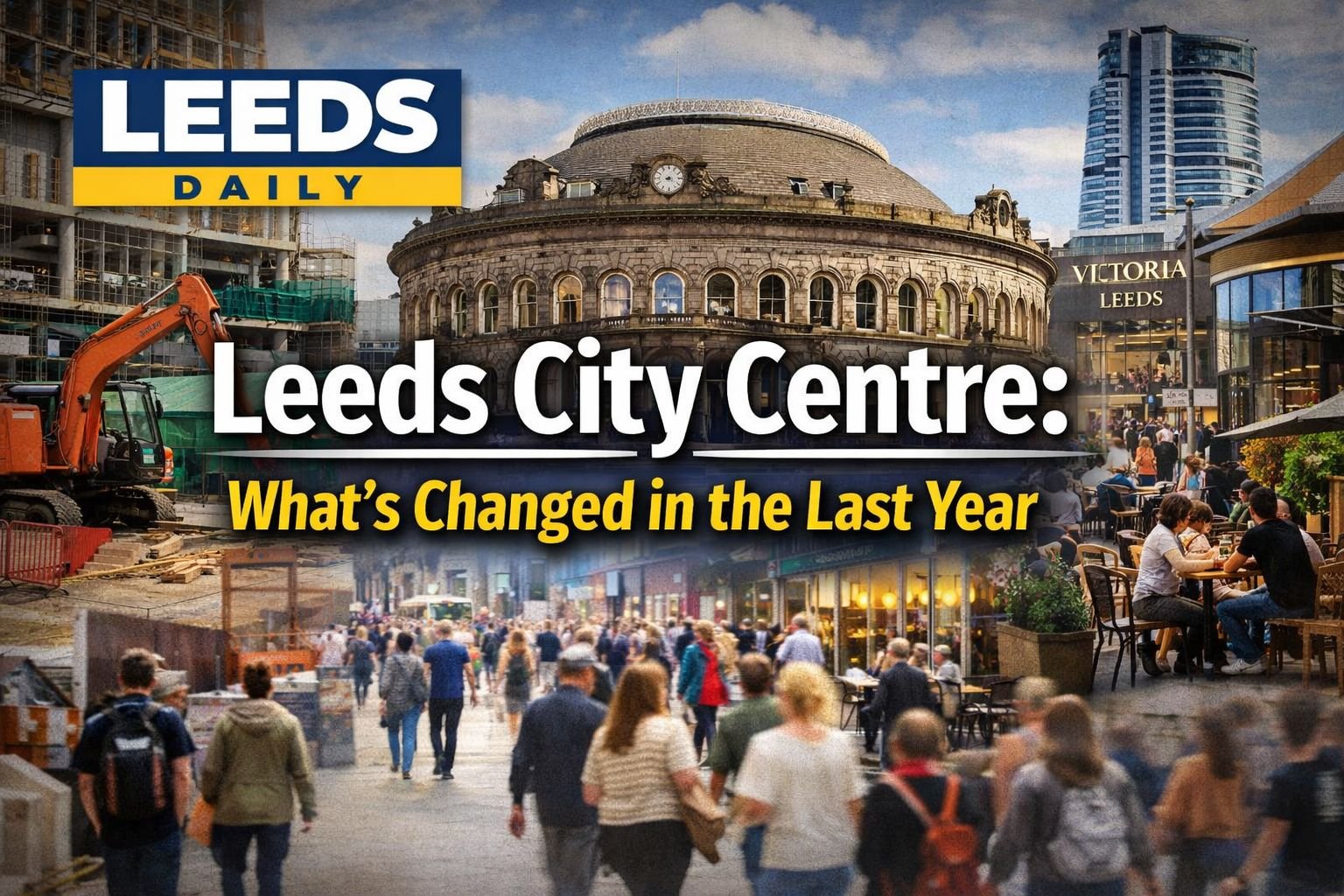
Walk through leeds city centre on any given week and you’ll notice something: it looks different. Not the wholesale transformation promised years ago, but something more incremental. A closed bar here. A new coffee shop there. Construction hoardings blocking half of Great George Street. The kind of gradual churn that happens when a city is caught between ambition and economic reality.
This is not about listing every opening or recycling press releases. It is about what has actually shifted in how leeds city centre feels, functions and serves the people who use it day in, day out.
Retail in Leeds City Centre: Survival Through Selectivity
The high street narrative is tired by now. Chains closing, independents struggling, online shopping blamed for everything. Leeds city centre has experienced all of that, but the picture over the past year is more nuanced than the usual doom-mongering suggests.
The long-empty Zara unit on Briggate finally filled in early 2025 when Superdrug moved in. It was not the aspirational tenant some hoped for, but occupancy matters in a city centre trying to avoid dead frontages. Further along Briggate, churn continues. Trinity Leeds still pulls crowds, but the sense is that its initial buzz has levelled out rather than grown.
The clearest retail divide is now strategic. Victoria Leeds has doubled down on premium positioning. Finisterre, Arabian Oud and Dinny Hall all opened in late 2025, each making their northern light debut. These are destination retailers targeting an affluent catchment rather than casual footfall. Victoria Leeds reported record footfall and 38 new leasing deals across 2024 and 2025, suggesting the model is working.
By contrast, mid-market retail feels squeezed. Budget brands consolidate, premium thrives, and everything in between fights for relevance. Trinity Leeds remains busy and functional, but it lacks the sense of momentum seen elsewhere. The move of Clapping Seoul from Trinity Kitchen pop-up to permanent fixture in April 2025 shows that food-led concepts with loyal followings still have room to grow.
Kirkgate Market remains one of the most important assets in leeds city centre, and also one of the most fragile. Footfall regularly exceeds 100,000 visitors a week, yet traders continue to voice concern about long-term council support. Its strength lies in authenticity, pricing and range, not polish. That refusal to sanitise itself is precisely why it still matters.
Independent retail clusters continue to survive in places like the Corn Exchange, where a mix of handmade goods, Yorkshire-focused brands and niche traders rely on loyal local support. Empty units still exist across the city centre. Official vacancy rates have fallen since 2021, but a walk down Briggate or through Queens Arcade shows that recovery remains uneven.
Leeds city centre retail is not collapsing. It is recalibrating. The shops that survive are either premium enough to justify the rents or distinctive enough to avoid online competition.
Hospitality Closures and Openings Tell a Clear Story
Hospitality in leeds city centre has had a bruising year. New openings have arrived, but they are barely keeping pace with closures. The Shed Bar closed in January 2025 after 16 years. BrewDog shut its city centre site in July 2025 as part of a national rationalisation. Captain’s Bar, The Imaginarium and Canned Heat followed, adding to a growing list of lost venues.
These closures are not isolated. Energy costs, food inflation, National Insurance increases and falling disposable income have combined to squeeze margins to breaking point. Nationally, nine licensed premises close every day. Leeds has not been immune.
What has opened shares common traits. Kerala Canteen launched in January 2025 with an established chef and a clear concept. BAKE arrived with a recognisable brand identity. Rinse Natural Wine built on an existing customer base. Lane7 and UYARE brought proven formats rather than experiments.
Risk appetite is low. Even successful operators are cautious. The lesson is simple: in leeds city centre, experience now matters more than novelty.
Call Lane remains the city’s nightlife spine, sustained by density rather than any single venue. It still works, but it relies heavily on weekend trade. Any broader economic wobble hits streets like this first.
South Bank Is Reshaping Leeds City Centre, Slowly but Surely
South Bank is where the long-term future of leeds city centre is being built. Aire Park opened its central green space in July 2025, creating the largest new city centre park in the UK. Office workers, residents and families already use it daily, a sign that it is more than a token gesture.
Around it, homes and offices are rising. Vastint’s residential phases are occupied. Further developments across Holbeck and the Climate Innovation District continue to move from concept to construction. Government interest in South Bank through the New Towns programme underlines confidence in Leeds’ growth, even if delivery remains years away.
The risk is connectivity. If South Bank becomes too self-contained, it risks disconnecting from surrounding communities. For now, it feels like a genuine extension of leeds city centre rather than a separate enclave.
Footfall and the Changing Role of the Office
Footfall in leeds city centre is marginally up year-on-year, but the pattern matters more than the headline figure. Busy days are busier. Quiet days are quieter. Events like UKREiiF demonstrate the city’s ability to absorb large numbers, but they also highlight reliance on external drivers rather than everyday activity.
Hybrid working is entrenched. Mondays and Fridays remain subdued. Residential development is filling some of that gap, but spending habits take time to settle. Leeds city centre is becoming more residential, but the transition is uneven.
Transport, Disruption and Accessibility
Major transport works entered construction in early 2026, bringing pavement widening, cycle routes and junction closures. The aim is a more walkable, connected city centre. The reality, for now, is disruption.
Rail connectivity has improved, with faster London journeys and increased regional services. Bus reliability remains a point of tension, particularly around the bus station, where safety concerns continue to affect perception and footfall in the eastern side of leeds city centre.
Safety, Homelessness and Street-Level Reality
Safety conversations have become more grounded over the last year. Visible homelessness has increased. Antisocial behaviour around key transport hubs remains a concern. Funding announcements and initiatives exist because the issues are real.
Leeds city centre is not uniquely unsafe, but perception shapes behaviour. Well-lit routes, visible support staff and consistent enforcement make a tangible difference.
What Locals Are Saying Now
Strip away official messaging and local sentiment is mixed but pragmatic. Traders worry about costs. Hospitality workers describe 2025 as the toughest year yet. Residents welcome Aire Park but question affordability. Students remain enthusiastic about nightlife. Long-time locals mourn familiar closures even if they had not visited recently.
There is no single narrative. Leeds city centre is improving in some areas and struggling in others, often at the same time.
The Year Ahead
The next year is unlikely to bring dramatic reversal or collapse. Expect more selective retail, cautious hospitality growth, continued South Bank construction and ongoing transport disruption.
Leeds city centre is not dying, nor is it booming. It is adapting. The changes are incremental, but taken together they signal a city learning how to function under new economic and social pressures.
For those who walk it weekly, that shift is already visible. The Leeds of 2026 will look different again. Whether that difference feels like progress or simply adjustment remains the open question.
Read More: Parklife 2026: A Leeds Reporter’s Guide to Manchester’s Most Intense Festival Weekend