
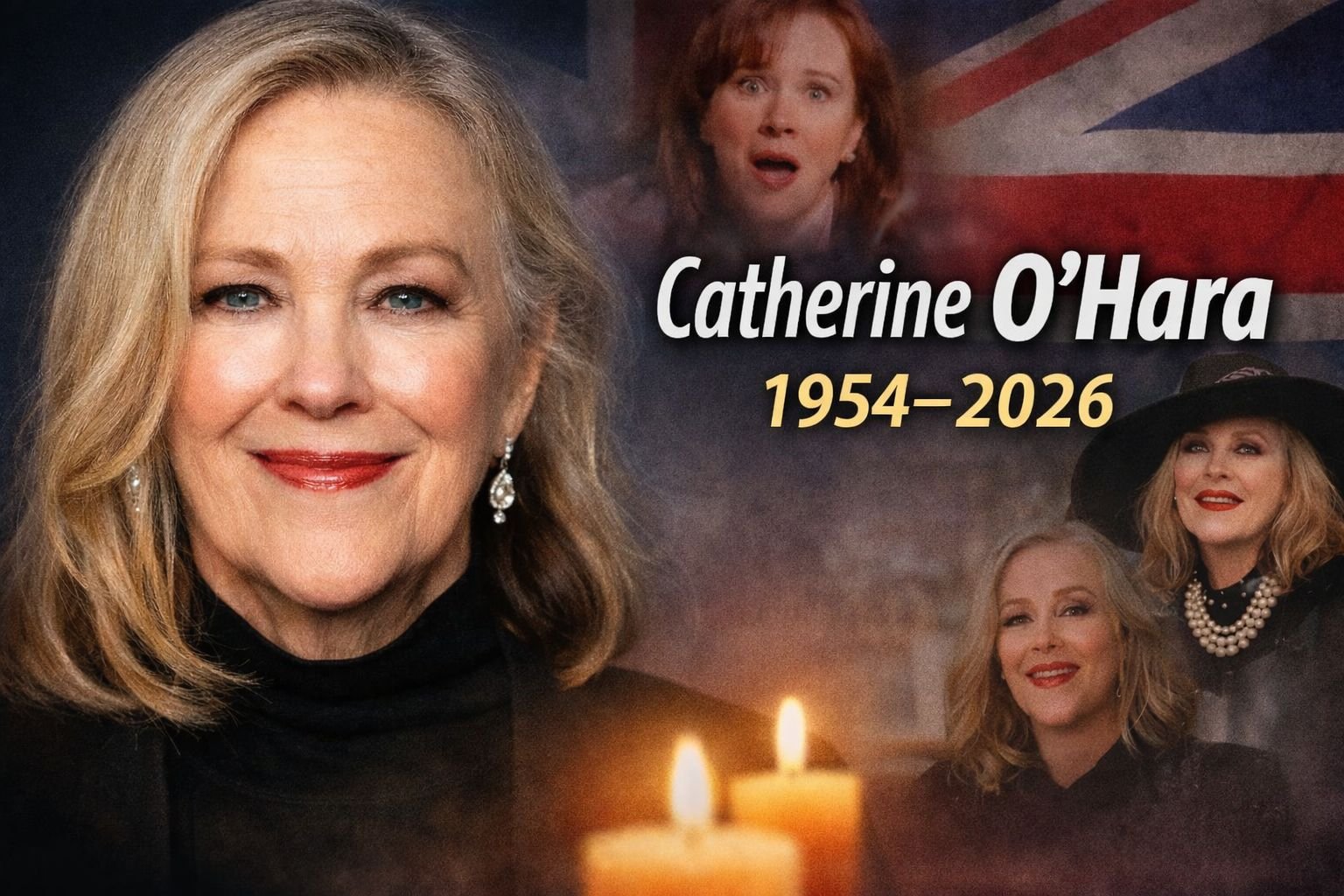
Catherine O’Hara has died at the age of 71, closing the chapter on one of the most distinctive careers in modern screen comedy. News of her death, confirmed late Friday, has prompted an outpouring of tributes not just from Hollywood, but from audiences and industry figures around the world who recognised her as something increasingly rare: a performer whose work travelled effortlessly across cultures.
From a UK perspective, her passing resonates in a quieter but no less meaningful way. O’Hara was never aggressively marketed to British audiences, yet her presence has long been woven into the fabric of UK viewing habits. She belonged to that small group of international performers who felt familiar rather than foreign, her work absorbed naturally into British television culture.
A global career that resisted typecasting
Catherine O’Hara career defied easy categorisation. She moved between sketch comedy, mainstream cinema, independent film and prestige television without ever becoming locked into a single genre. That adaptability made her a constant presence across decades of global entertainment, even as tastes and platforms shifted.
While North American audiences often associate her with landmark comedy institutions, international viewers encountered her differently. In Britain, her work arrived through a mix of cinema releases, festive television schedules and later, algorithm-driven streaming discovery. The result was a reputation built gradually, sustained by repeat exposure rather than promotional hype.
Why her work translated internationally
What distinguished Catherine O’Hara on the global stage was her commitment to character. She never relied on cultural shorthand or topical references that aged quickly or failed to travel. Instead, her performances were rooted in recognisable human behaviour: insecurity masked by confidence, vanity offset by vulnerability, ambition complicated by self-doubt.
Those qualities transcended national humour styles. Whether viewed in Manchester, Melbourne or Montreal, her characters felt complete and specific rather than tailored to a single audience. That universality is increasingly valued in a globalised entertainment market where content is consumed simultaneously across borders.
Streaming and the second life of her work
In the past decade, streaming platforms gave Catherine O’Hara career a second life internationally. Series that might once have remained regional successes became global talking points, introducing her work to viewers who had not grown up with her films.
For UK audiences in particular, this era reframed her legacy. Younger viewers discovered her alongside contemporary releases, while older audiences revisited familiar performances with fresh context. This dual audience effect strengthened her standing not just as a nostalgic figure, but as a relevant one.
Industry reaction beyond Hollywood
Tributes following her death have highlighted how widely respected she was within the global entertainment industry. Fellow actors, writers and directors consistently described her as a performer who elevated everything around her. That reputation extended beyond North America, with international collaborators frequently citing her discipline and generosity on set.
In an industry often dominated by speed and visibility, O’Hara represented longevity earned through craft. She did not chase trends; she adapted to them on her own terms. That approach resonates strongly in markets like the UK, where audiences tend to reward consistency and authenticity over spectacle.
A British lens on Catherine O’Hara appeal
From a British reporting standpoint, O’Hara’s appeal aligns closely with domestic comedy traditions. Her performances trusted the audience. She allowed silences, awkwardness and exaggeration to breathe, confident that viewers would meet her halfway.
This sensibility mirrors long-standing British preferences for character-driven storytelling, particularly outside London, where comedy grounded in recognisable behaviour has always carried weight. It helps explain why her work felt at home on UK screens despite originating elsewhere.
A lasting global legacy
As broadcasters and platforms revisit her catalogue in the wake of her death, her global influence is likely to become even clearer. Her work spans formats, generations and continents, offering a case study in how performance rooted in truth can travel further than any marketing campaign.
For world entertainment audiences, Catherine O’Hara leaves behind more than a list of credits. She leaves a blueprint for longevity in a volatile industry: commit fully, respect the audience, and never dilute character for approval.
Read More: Ricky Gervais Leeds: What His Mortality Show Revealed About the City and British Comedy