
Every June, you can feel it even from West Yorkshire. Trains heading south are busier, group chats light up with weekend plans, and by Friday afternoon plenty of Leeds festivalgoers are already on the move. Parklife 2026 is almost here, and once again Manchester is preparing for a weekend that stretches far beyond the boundaries of Heaton Park.
From a Leeds perspective, Parklife has become the closest thing the North has to a true metropolitan festival. It is not a rural escape and it is not a camping rite of passage. It is a city-scale event that pulls tens of thousands from Leeds, Sheffield, Liverpool and beyond into one place, for two long days, with very little margin for error.
This is what Parklife 2026 actually looks like on the ground, and what anyone travelling from Leeds should know before committing to it.
What Parklife 2026 Really Is
At its core, Parklife Festival is a city festival in the truest sense. Held inside Heaton Park, it relies entirely on existing urban infrastructure. There is no campsite, no buffer zone, and no slow build-up. Everyone arrives, leaves and moves at the same time.
For Leeds attendees, that makes Parklife both attractive and demanding. You can travel down on the morning train, be inside the gates by lunchtime and still be back in your own bed the next night. But that convenience comes at the cost of queues, crowd density and transport pressure that you simply do not get at countryside festivals.
Parklife 2026 is expected to host around 80,000 people per day. That figure has not changed for years, not because of lack of demand, but because the site cannot realistically take more without tipping from intense into unmanageable.
Why Parklife 2026 Feels Bigger This Year
There is a sense, particularly among northern audiences, that Parklife 2026 sits at a crossroads. Festival prices elsewhere have climbed sharply, while urban festivals have become more appealing to younger crowds priced out of week-long camping events.
From Leeds, the appeal is obvious. No tent. No four-day commitment. One train down the TransPennine route and you are in the thick of it. That has pushed demand up, especially for day tickets, and organisers are expecting some of the busiest travel days since before the pandemic.
The Parklife 2026 Lineup and Its Direction
The Parklife 2026 lineup continues the festival’s long-running focus on contemporary UK music culture rather than nostalgia. Calvin Harris headlines Saturday night, returning to Manchester for the first time in more than a decade. His presence signals mainstream confidence rather than a pivot away from club culture.
Sammy Virji’s rise to headline status reflects how closely Parklife tracks current dancefloor momentum. Skepta’s inclusion reinforces the festival’s roots in grime and UK rap, while Zara Larsson brings international pop appeal without reshaping the festival’s core identity.
For Leeds crowds used to travelling to festivals like Reading or Leeds Festival itself, Parklife can feel more electronic, more urban and less genre-diverse. That is intentional. This is a festival built around movement, bass and high-energy sets rather than guitars and long singalongs.
What Is New for Parklife 2026
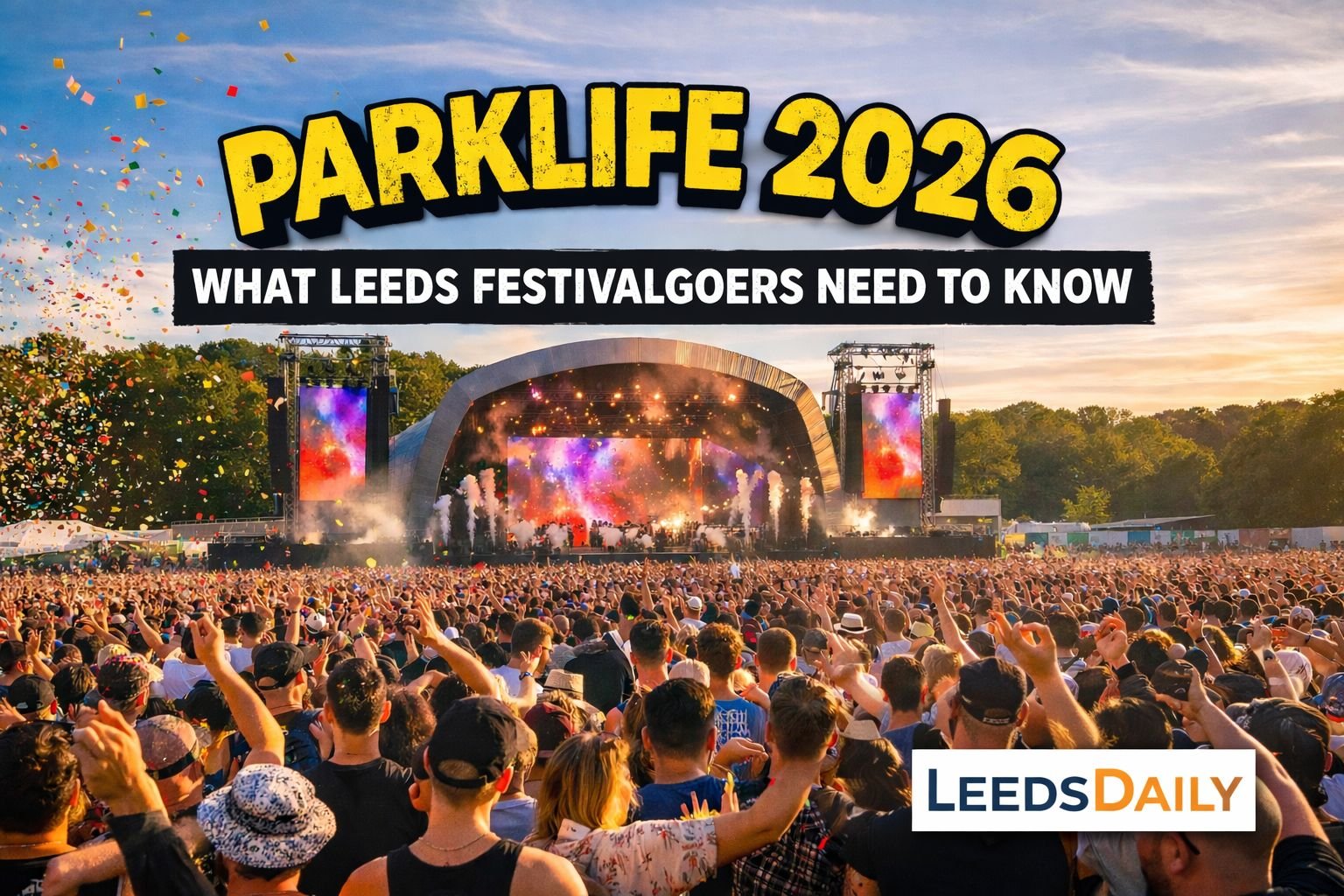
The biggest physical change for Parklife 2026 is the introduction of the PANORAMA Stage, replacing and expanding on the former Hangar setup. With a curved LED screen, tiered platforms and controlled sightlines, the aim is to manage crowd flow better during peak sets.
Capacity remains capped at 80,000 per day. Organisers have confirmed that Heaton Park cannot expand further without unacceptable impact on nearby neighbourhoods. Rather than growing bigger, the focus for Parklife 2026 is on moving people through the site more efficiently.
Parklife 2026 Tickets and Value From a Leeds Perspective
Parklife 2026 tickets start at around £139.50 for the weekend, with day tickets from £85 and payment plans available. Compared with multi-day camping festivals now pushing well beyond £250, that pricing feels deliberately targeted at students and young professionals across the North.
For Leeds attendees, the real cost calculation includes trains, late-night returns or overnight accommodation. The festival itself offers solid value in terms of lineup and production, but the surrounding logistics can quickly push the weekend beyond budget if not planned carefully.
VIP upgrades reduce queue times and offer better facilities, but they do not fundamentally change the nature of the event. Parklife remains busy, loud and tightly packed regardless of ticket tier.
Entry, Crowds and the Reality Inside the Park
Anyone travelling from Leeds should aim to arrive early. Entry before midday is noticeably smoother, while arrivals between 2pm and 4pm regularly face long queues. Security checks are thorough and can slow things further during peak hours.
Inside, movement between stages is possible but requires planning. During headline sets, certain routes effectively close as crowds thicken. This is not a festival for drifting casually between acts. Decisions matter.
Transport Back to Manchester and Beyond
Transport is where Parklife 2026 will test patience. Heaton Park Metrolink station closes in the evening, pushing crowds towards Bowker Vale or long walks back towards Manchester city centre.
For Leeds festivalgoers, the key question is the return journey. Late-night trains are limited, and tram queues after headliners can stretch well beyond an hour. Many experienced attendees walk part of the way to avoid bottlenecks before picking up onward transport.
If you are relying on same-night trains back to Leeds, timings need to be checked and double-checked. Missing the last service is not uncommon.
Policing, Safety and Local Impact
Security presence at Parklife is heavy but controlled. Over a thousand staff work across the site, supported by Greater Manchester Police. Arrest numbers have fallen significantly since the mid-2010s, largely due to tighter crowd management and entry controls.
The wider impact on local residents remains controversial. Road closures, parking restrictions and noise monitoring are now standard, but for two days each year, Heaton Park effectively stops being a public space. That tension is part of the festival’s ongoing relationship with the city.
How Parklife 2026 Compares With Other UK Festivals
Compared with rural camping festivals, Parklife 2026 concentrates pressure into short, intense windows. Where countryside events spread arrivals over days, Parklife funnels tens of thousands into a few hours.
For Leeds audiences, the trade-off is clear. Less escapism, more convenience. Fewer days, higher intensity. Whether that feels like value depends on what you want from a festival.
Who Parklife 2026 Is For and Who It Is Not
Parklife suits confident, organised attendees who are comfortable with crowds and urban logistics. It works best for groups who plan travel in advance and accept queues as part of the experience.
It is not well suited to families, casual visitors or anyone seeking a relaxed atmosphere. If you prefer space, shade and slow afternoons, Parklife can feel overwhelming.
The Verdict
Parklife 2026 remains one of the North’s most important music events. For Leeds festivalgoers, it offers a high-energy alternative to camping festivals, with a lineup that reflects where UK music culture is right now.
It is demanding, crowded and logistically unforgiving, but for those who understand what they are signing up for, Parklife 2026 delivers a uniquely urban festival experience that few others in the UK can match.
Read More: Northern Lights Leeds: When the Aurora Really Appears Over West Yorkshire