
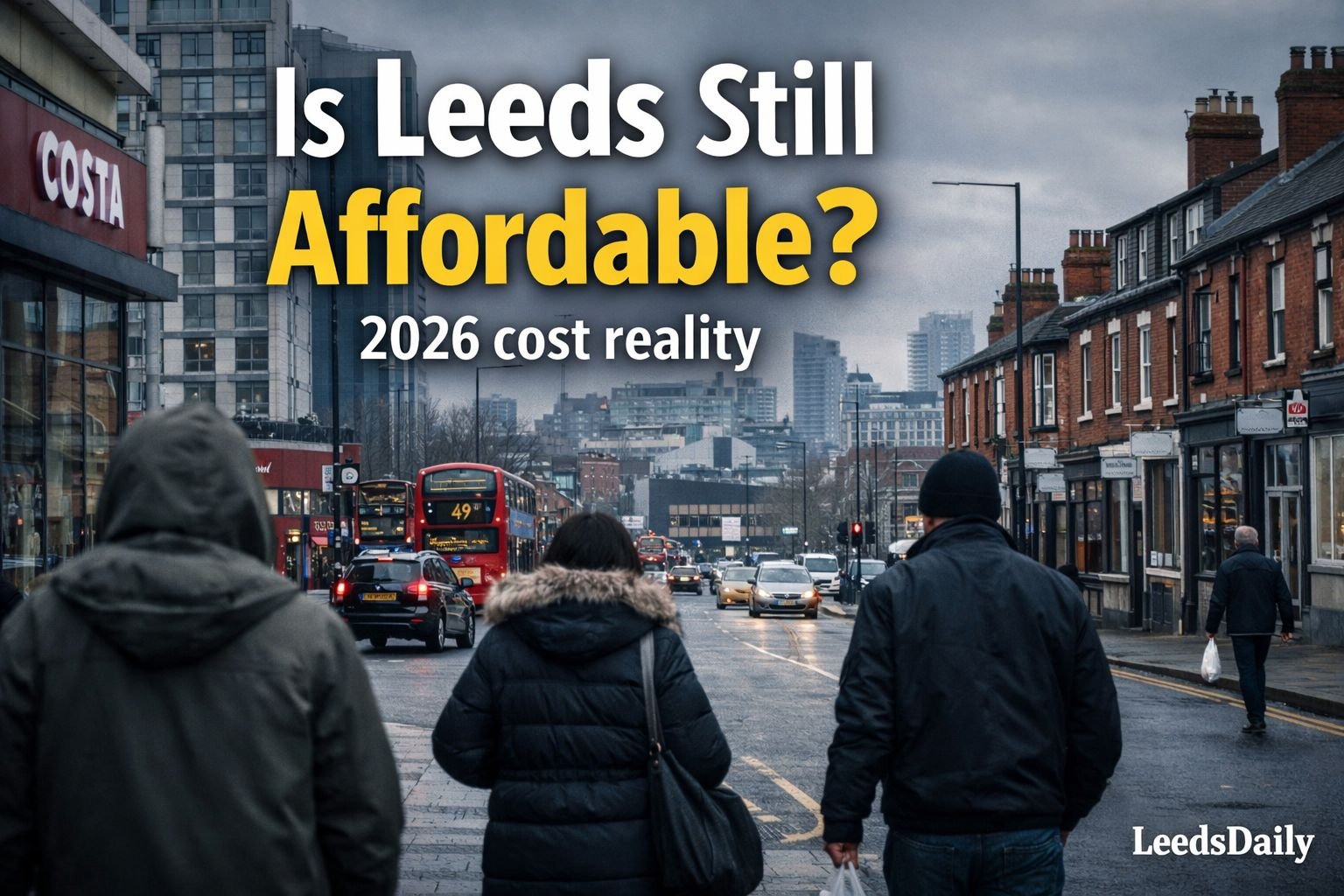
When you’re paying £1.74 more every week just to keep your bins collected and potholes filled, and your energy bill has crept up another 28 pence a month, the cost of living in leeds starts to feel less like a northern bargain and more like a slow, grinding squeeze. Walk down Kirkstall Road on a cold January morning in 2026 and you will hear the same conversations outside Costa and in the Aldi queue. Rents may have steadied, but wages have not caught up.
Leeds is still cheaper than Manchester overall, but not by much and not for everyone. The city that once promised affordable city living outside London now demands sharper budgeting, compromises on location, or a second income to stay comfortable.
So is Leeds still affordable in 2026? The honest answer depends entirely on who is asking.
The Cost of Living in Leeds in 2026: A Reality Check
The cost of living in leeds has not exploded overnight. Instead, it has settled at a level that quietly excludes certain groups while remaining workable for others. Dual-income households and higher earners can still manage a decent quality of life. Single earners, renters, and lower-paid workers are feeling the pressure far more sharply.
That gap between who Leeds works for and who it does not defines affordability in 2026.
Housing Costs in Leeds (2026)
Rent: Stabilisation Without Relief
Rents in Leeds have finally stopped their relentless climb. After severe 10 to 12 percent annual increases in 2023, growth has slowed to around 2 to 3 percent heading into 2026. On paper, that sounds like relief. In reality, the baseline is now far higher.
The average one-bedroom flat rents for £955 a month, while a three-bedroom house sits around £1,448. That is manageable only if your income has risen and for many Leeds residents, it has not.
Affordability varies dramatically by postcode:
| Area | Average Monthly Rent | Typical Tenants |
|---|---|---|
| Chapel Allerton | £1,112 | Young professionals |
| Roundhay | £1,155 | Families |
| Headingley | £840 | Students and professionals |
| City Centre | £1,200 to £1,400 | Professionals |
| Kirkstall and Burley | £693 to £1,000 | Mixed |
| Pudsey and Morley | £866 to £969 | Families and commuters |
The rental market has stabilised, but at 30 to 40 percent higher than five years ago. That is not affordability returning. It is renters running out of options.
Buying a Home: Still Possible, Barely Comfortable
House prices in Leeds dipped slightly through late 2025, but affordability remains stretched. The average property sells for around £312,000, while first-time buyers typically pay closer to £214,000. That still requires household incomes of roughly £40,000 or more.
The house price-to-earnings ratio sits at 6.46, lower than recent years but far from comfortable for a city where median full-time pay is about £36,000.
In short, buying in Leeds is still possible, but only with stable incomes, deposits, and little margin for error.
Read More: Project House Leeds Is What Happens When the Right People Build a Venue
Energy, Council Tax and Household Bills
Beyond rent or mortgages, the hidden drivers of the cost of living in leeds are unavoidable.
Energy bills in early 2026 sit around £1,670 to £1,690 a year, with standing charges alone costing about £1 per day. Council tax is rising by 4.99 percent, adding roughly £90 a year to a Band D household.
Leeds still has comparatively low council tax for a core city, but that is little comfort when wages are not rising fast enough to absorb it.
Food, Transport and Daily Expenses
Food Shopping in 2026
Weekly food shops now require strategy. Budget supermarkets remain the cheapest option, but choice is limited. A single adult typically spends £150 to £200 a month, while families easily reach £500 to £600.
Eating out, once a Leeds perk, is no longer cheap. A mid-range meal for two sits around £60, pushing casual dining into occasional treat territory.
Transport: The Commuter Cost
Public transport remains a frustration. Bus fares are still capped, but that protection is fragile. Driving is costly. Fuel, insurance, parking, and congestion make commuting from outer suburbs expensive in both time and money.
Transport costs are now a meaningful contributor to the overall cost of living in leeds, especially for families pushed further out by housing prices.
Wages vs Living Costs: Where the Maths Breaks
This is where Leeds’ affordability story starts to unravel.
Median full-time earnings sit around £37,800, below the UK average. Adjusted for inflation, real wages have fallen, not risen. The result is simple. Everyday costs are climbing faster than pay packets.
For single earners on £25,000 to £30,000, independent living is no longer realistic without compromise. Shared housing, longer commutes, or family support are now the norm rather than exceptions.
Leeds Compared With Other UK Cities
Compared with Manchester, costs are now broadly similar, with Leeds only marginally cheaper.
Compared with Sheffield, Leeds is dramatically more expensive, particularly for housing.
Compared with York, costs are broadly comparable, though York’s smaller rental market creates pressure.
Compared with London, Leeds remains far cheaper and that remains its biggest advantage.
Leeds has moved from cheap northern city to mid-tier UK city pricing.
Who Leeds Is Still Affordable For
The cost of living in leeds works for some and fails others.
Couples earning £50,000 or more combined are generally comfortable.
Remote workers on national salaries are well positioned.
Students can manage, but budgets are tighter than before.
Single earners under £30,000 are struggling.
Low-wage workers are largely priced out of independent living.
Affordability now depends more on household structure than ambition.
What Living in Leeds Feels Like Now
Across Headingley, Harehills, Pudsey and Morley, residents describe the same pattern in different words. Leeds is still livable, but no longer forgiving. One unexpected bill can undo careful budgeting. Saving feels harder. Moving closer to work often feels impossible.
The city has not become hostile, but it has become demanding.
Is Leeds Still Affordable in 2026?
Yes, but only for some.
The cost of living in leeds remains lower than London and broadly in line with Manchester, but the cushion that once defined the city has thinned. Dual-income households and higher earners can still thrive. Single earners, renters, and lower-paid workers are increasingly squeezed.
Leeds has not failed economically. In many ways, it has succeeded and that success is exactly what has made affordability harder.
For anyone considering a move in 2026, the advice is simple. Come with a realistic salary, a clear idea of where you can compromise, and no illusions about Leeds being cheap. It is not anymore. It is simply less expensive than London.