
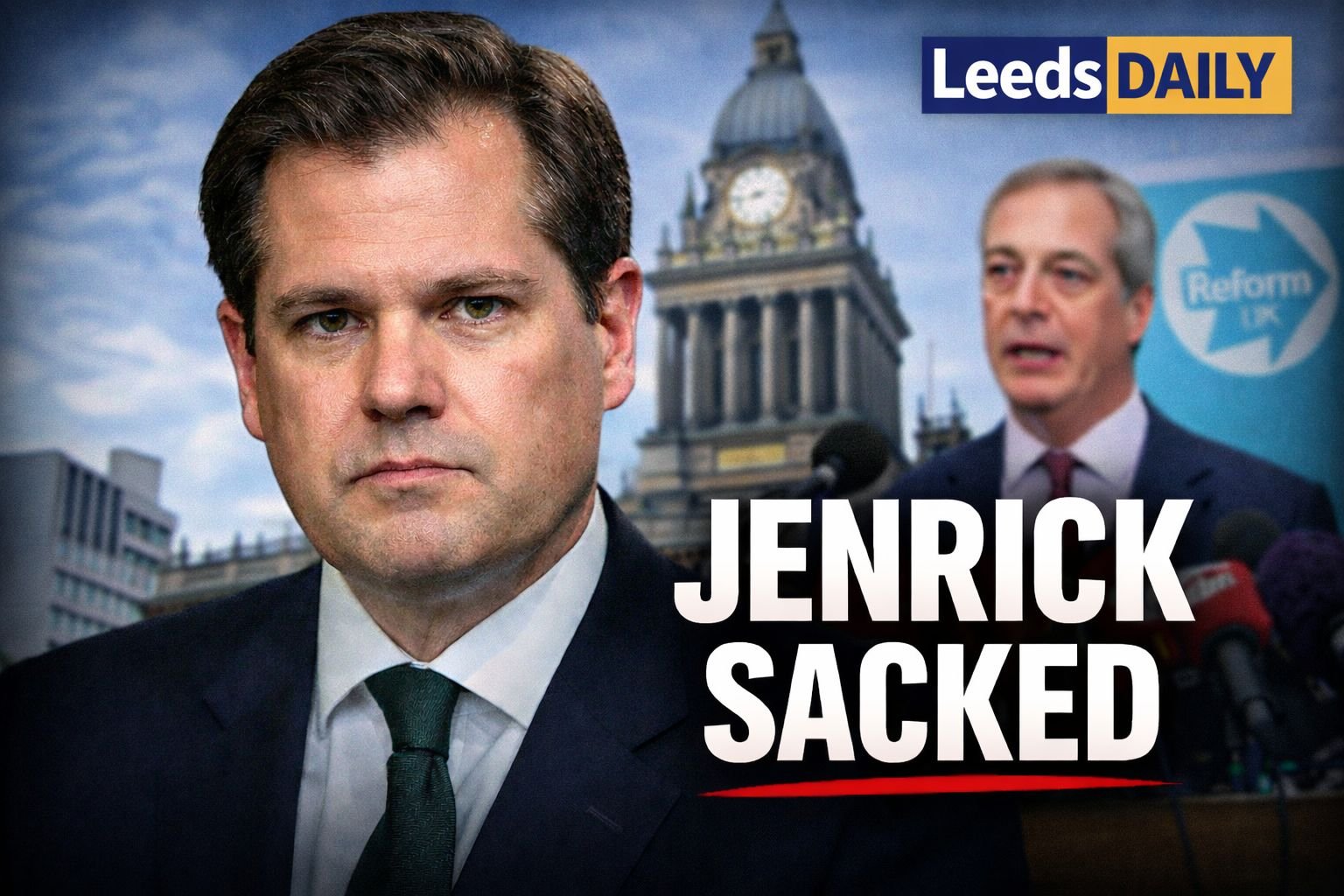
The Conservative Party’s internal crisis intensified on Wednesday with the removal of Robert Jenrick from the shadow cabinet, a decision that has sent fresh shockwaves through northern political circles including here in West Yorkshire.
Conservative leader Kemi Badenoch confirmed that the Newark MP had been stripped of the party whip and suspended from party membership following allegations that he had been holding undisclosed discussions with Reform UK. Badenoch said she had been presented with evidence she believed showed Jenrick was preparing to leave the party in a way that would have caused significant internal damage.
Robert Jenrick has yet to give a detailed public response.
Why this matters in Leeds and West Yorkshire
While the drama unfolded in Westminster, its implications are being closely watched in Leeds a city where the Conservatives have struggled for relevance and where voter frustration with national politics continues to run deep.
At the 2024 general election, the Conservatives failed to win a single seat across Leeds, with Labour consolidating its dominance and Reform UK recording noticeable vote shares in several West Yorkshire constituencies. In areas such as Castleford, Pontefract, and parts of Wakefield district, Reform’s performance reflected a growing appetite for alternatives to the traditional two-party system.
For local councillors in Leeds, the Robert Jenrick saga reinforces a wider concern that national Conservative infighting is leaving northern priorities sidelined.
A leadership rivalry reaches breaking point
The decision to sack Robert Jenrick follows months of tension dating back to the Conservative leadership contest, where Badenoch narrowly defeated him. Despite ideological differences, she initially appointed him as shadow justice secretary in a bid to steady the party after electoral defeat.
That fragile unity has now fractured. Senior Conservatives privately acknowledge that fears of further defections have been rising as polling continues to place Reform ahead of the Conservatives nationally a trend that has particular resonance in Yorkshire towns where voters feel increasingly detached from Westminster.
Jenrick had previously denied any intention to defect, telling broadcasters late last year that he remained committed to rebuilding the party. Badenoch’s office now says that assessment changed after new information came to light.
Reform’s rise and the Yorkshire context
In West Yorkshire, Reform UK’s growing profile has not gone unnoticed. The party has capitalised on frustration around immigration policy, housing pressures, and the perceived imbalance between London and the regions.
Leeds City Council, like many northern authorities, is grappling with rising demand for temporary accommodation, pressures on social care, and long-running debates over asylum housing. These are issues that resonate strongly with voters and ones that have increasingly shaped political campaigning across Yorkshire.
For some local analysts, Jenrick’s hardline positions on immigration and planning made speculation about Reform talks inevitable. His rhetoric often aligned more closely with Reform’s messaging than with the post-election direction Badenoch has tried to set.
Conservative instability and northern consequences
Jenrick’s removal follows a string of departures and internal disputes that have damaged Conservative credibility in the North. Since the election, Reform has actively courted former Tory figures, reinforcing the perception of a party losing control of its own ranks.
In Leeds, where Conservative councillors are already thin on the ground, the latest episode is unlikely to win back sceptical voters. Many residents remain focused on cost-of-living pressures, transport investment, and the long-promised regeneration of city and town centres issues they feel receive little attention amid Westminster power struggles.
A senior Labour figure in West Yorkshire described the situation as “another example of a Conservative Party talking to itself while northern cities get on with the hard work”.
Policy fault lines that hit home locally
Jenrick’s political career has been shaped by housing and immigration two policy areas with direct consequences for Leeds. As housing secretary, his approach to planning reform drew criticism from councils who argued it undermined local decision-making.
In Leeds, where demand for affordable housing continues to outstrip supply, local leaders have repeatedly called for greater flexibility and long-term funding rather than ideological battles over targets and enforcement. The absence of a stable national consensus has made those challenges harder to address.
What happens next
Jenrick now sits as an independent MP unless he formally joins another party. Nigel Farage has confirmed conversations took place but has stopped short of announcing any immediate defection.
For Badenoch, the priority is containment. With local elections approaching and Reform polling strongly across northern England, she faces mounting pressure to stabilise her party and present a coherent alternative to both Labour and Reform.
In Leeds, however, the episode is likely to reinforce an entrenched view that the Conservative Party remains consumed by internal conflict while northern cities continue to wait for meaningful engagement on the issues that matter most locally.